While Buffalo is world-renowned for Niagara Falls, it is less known as a premier destination for experiencing exceptional American architecture from the early 19th to the early 20th centuries. Following the opening of the Erie Canal in 1825, the city entered a golden age of design that remains preserved in its streets today.
This architectural boom was fueled by Buffalo’s economic prosperity and its strategic location as a gateway between New York City and Chicago. The city’s vibrant energy attracted legendary architects from across the East Coast and the Midwest, who used Buffalo as a canvas for experimental urban design and pioneering styles. The following renowned architects are among those who shaped the city’s skyline:
Frank Lloyd Wright:
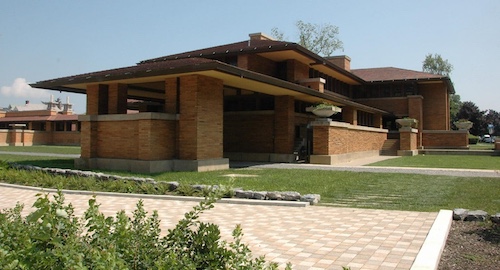
Frank Lloyd Wright is famous for creating the “Prairie House” style—a residential design inspired by the flat, expansive prairies of the American Midwest, aiming for “harmony between nature and humanity.” Although based in Chicago, Wright maintained a close friendship with Darwin D. Martin, an executive at the Larkin Soap Company in Buffalo.
Because of this strong connection, Buffalo is home to several significant Wright-designed structures. The most notable among them is the Darwin D. Martin House, a masterpiece of the Prairie style that exemplifies Wright’s vision of integrating indoor and outdoor living spaces.
Martin House Tour
Louis Sullivan:
Louis Sullivan is often called the “Father of Modernism” and was a mentor to Frank Lloyd Wright. Together with his architectural partner, Dankmar Adler, he designed the Guaranty Building in Buffalo, which remains one of the city’s most significant landmarks.
Sullivan is a pivotal figure in history for integrating the mass-produced steel frames of the era into his designs, effectively laying the foundation for the age of skyscrapers. He is perhaps best known for his famous philosophy, “form ever follows function,” advocating that the design of a building should be primarily based upon its intended purpose.
Louis Sullivan’s Guaranty Building
Henry Hobson Richardson:
He studied in Paris during the 1860s and, upon returning to the United States, established a unique architectural style based on the heavy, grounded aesthetic of the Romanesque. This style, characterized by its massive stone walls and rounded arches, became known as “Richardsonian Romanesque.”
Henry Hobson Richardson
Frederick Law Olmsted:
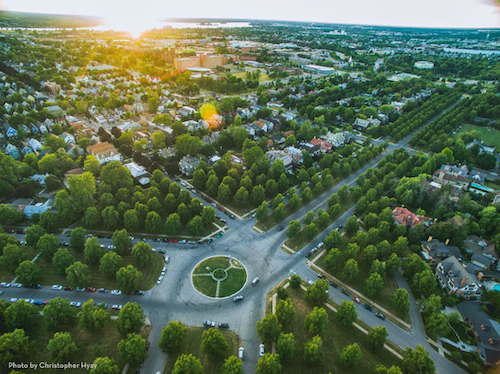
Frederick Law Olmsted was a pioneer of landscape architecture. He is best known for designing Central Park in New York City. His idea of “parks that everyone can enter and enjoy regardless of social class” was uncommon at the time and reflected his side as a social reformer who believed in equality for all. Buffalo is home to several parks designed by Olmsted and the tree-lined parkways that connect them (the Buffalo Park System), which was the first park system in America.
Buffalo’s Frederick Law Olmsted Legacy
Buffalo is also home to the M&T Bank Building, designed by Minoru Yamasaki—the architect behind the World Trade Center—along with numerous other buildings by renowned architects, beautiful parks, historic residences, and tree-lined parkways. Furthermore, there is an active local movement dedicated to preserving these structures and areas for future generations. When walking through Buffalo, please look up at the architecture and stroll through the parks and parkways to experience the history of American architecture and urban planning.